We are concluding our four month David Lynch retrospective by presenting The Elephant Man, his haunting sophomore feature, now in a breathtaking new 4K restoration from Paramount Pictures. One of the most emotionally resonant and visually arresting films of the 20th century, this is the perfect way to pay our final tributes.
Shot in stark, luminous black-and-white by the legendary Freddie Francis, and produced by Mel Brooks (yes, that Mel Brooks), this Victorian-era tragedy tells the true story of John Merrick (An unforgettable John Hurt), a severely deformed man exploited in a freak show before being taken under the wing of a sympathetic surgeon, Dr. Frederick Treves (a quietly commanding Anthony Hopkins). What follows is a delicate, devastating exploration of what it means to be human in a society obsessed with appearances.
With The Elephant Man, Lynch (Eraserhead, Blue Velvet, Mulholland Drive) stepped into the mainstream without sacrificing a shred of his uncanny sensibility—crafting a deeply compassionate portrait of otherness that still stuns over four decades later.
Read More
Join us at The Frida Cinema for a special run of Selena, celebrating the legendary life and music of Selena Quintanilla in honor of her birthday on April 16th.
Directed by Gregory Nava, Selena tells the story of the Queen of Tejano music, from her early years growing up in Texas to her rise to stardom and tragic, untimely death. The film beautifully portrays Selena’s determination, talent, and her unwavering connection to her family, particularly her father (Edward James Olmos), who pushed her to reach her full potential.
Jennifer Lopez’s powerful portrayal of Selena earned her critical acclaim, and the film remains a heartfelt tribute to the artist’s legacy. Selena is more than just a biopic; it’s a celebration of her music, her influence on Latin culture, and the indelible mark she left on the world.
Read More
The penultimate film in our Akira Kurosawa retrospective is his epic 1985 masterpiece, Ran, now restored in glorious 4K thanks to Rialto Pictures!
A grand and visually breathtaking epic that transposes Shakespeare’s King Lear into the chaotic feudal era of 16th-century Japan of Shakespeare’s King Lear, Ran stars screen legend Tatsuya Nakadai as Hidetora Ichimonji, an aging warlord who decides to divide his vast domain among his three sons in hopes of securing peace in his final years. Instead, his decision ignites a violent power struggle, as betrayal and ambition shatter his family and plunge the region into civil war. Stripped of power and driven into madness, Hidetora becomes a ghost of his former self, wandering through the wreckage of a world he once ruled.
With its masterful use of color, and meticulously staged battle sequences, Ran is both an intimate tragedy, and a large-scale historical spectacle. In delivering his haunting and majestic summation of his lifelong explorations of power, betrayal, and the devastating consequences of human ambition, Kurosawa employs sweeping landscapes, intricate battle sequences, and vivid color symbolism to create a world teetering on the edge of chaos.
About the Restoration
Ran’s original 1985 production was made possible through a French-Japanese collaboration between Kadokawa and French producer Serge Silberman, with distribution later handled by companies such as Orion and Studiocanal. That international partnership was rekindled decades later when Kadokawa and Studiocanal brought on French laboratory Éclair to restore the film in 4K under Studiocanal’s supervision, using the original negative as its source. Much of the restoration was completed manually, frame by frame, with color grading approved by Masaharu Ueda, one of Ran’s three cinematographers and a longtime collaborator of Kurosawa.
Read More
Encoring as part of our Andrei Tarkovsky Retrospective is Andrei Rublev, one of the director’s most celebrated and historically significant works. Set in 15th-century Russia, the film follows the life of Andrei Rublev, a monk and icon painter, as he grapples with the brutality of the world around him, the spiritual toll of his calling, and the complexities of artistic creation.
Upon its release, Andrei Rublev faced heavy censorship in the Soviet Union, and it was initially banned for its perceived bleak portrayal of Russian history and spirituality. However, it eventually garnered international acclaim, receiving the FIPRESCI Prize at the 1969 Cannes Film Festival and securing its place as one of the greatest films ever made.
Andrei Rublev remains a cornerstone of both Tarkovsky’s career and Russian cinema, offering a profound exploration of the intersection between art, faith, and the human condition.
Read More
Up first in our Andrei Tarkovsky Retrospective is Mirror, his 1975 masterpiece, now celebrating its 50th anniversary with a brand new restoration.
A deeply personal and nonlinear exploration of memory, identity, and the passage of time, Mirror weaves together fragmented glimpses of a man’s life through the eyes of his mother, wife, and son. Using a rich tapestry of dreamlike imagery, archival footage, and poetic voiceovers, Tarkovsky crafts a meditative and emotionally charged reflection on the scars of the past, the shifting nature of personal history, and the ineffable connections between generations.
With its non-traditional narrative structure and evocative visuals, Mirror stands as a haunting testament to Tarkovsky’s unparalleled ability to explore the inner landscapes of the human spirit.
Read More
Our 4/20 Weekend comes to a close with the legendary 3 hour documentary Woodstock. This pick comes directly from Finn, who is our second Volunteer Of The Month for April!
An intimate look at the Woodstock Music & Art Festival held in Bethel, NY in 1969, from preparation through cleanup, with historic access to insiders, blistering concert footage, and portraits of the concertgoers; negative and positive aspects are shown, from drug use by performers to naked fans sliding in the mud, from the collapse of the fences by the unexpected hordes to the surreal arrival of National Guard helicopters with food and medical assistance for the impromptu city of 500,000.
Two nights only. Don’t miss this epic picture of peace, music, and love on the big screen!
Read More
Hot off of its Academy Award for International Feature Film, Walter Salles’ I’m Still Here is finally making its way to The Frida Cinema!
Starring the incomparable Fernanda Torres (also nominated for Best Actress at the Oscars), the story is set in 1971, when Brazil’s military dictatorship has reached its height. The Paiva family — Rubens, Eunice, and their five children — live in a beachside house in Rio, open to all their friends. One day, Rubens is taken for questioning and does not return.
Thank you to our friends at Sony Picture Classics for letting us play this wonderful film.
Read More
The nationwide Science on Screen® program returns to The Frida with Christopher Nolan’s Oppenheimer, which will open with live presentation “Oppenheimer, Quantum Mechanics, and the Structure of Reality” presented by Dr. Jacob Barandes, philosopher of science and mathematical physicist at Harvard.
Read More
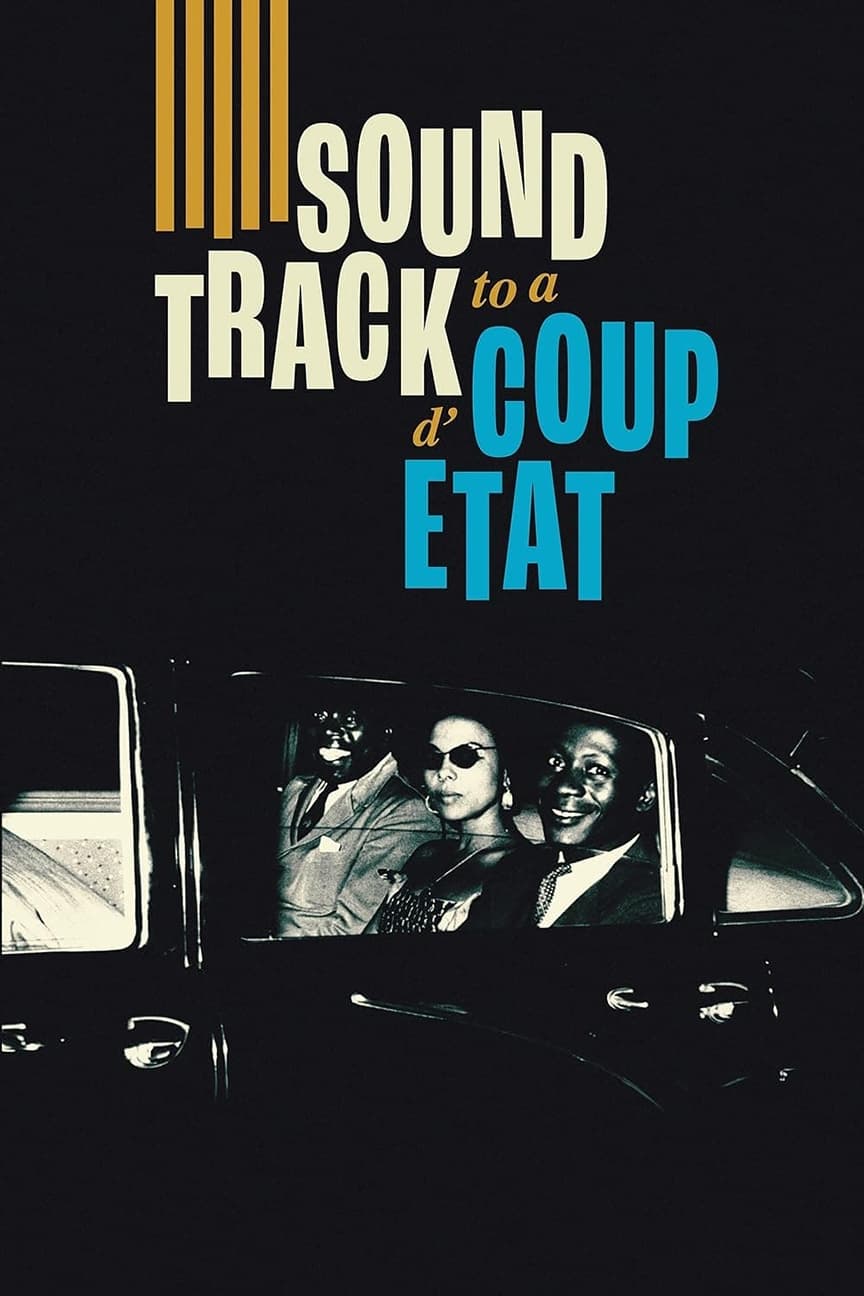
Johan Grimonprez’s Soundtrack to a Coup d’État is a gripping documentary that examines the intersection of music, politics, and Cold War-era power struggles in Africa.
The film explores the 1961 assassination of Congolese leader Patrice Lumumba, revealing how Western governments —particularly the U.S. and Belgium — manipulated political events to maintain control over Africa’s resources. Against this backdrop of covert operations and geopolitical maneuvering, the documentary highlights the role of jazz musicians, such as Louis Armstrong, who were sent as cultural ambassadors, often unknowingly aiding in political cover-ups.
Read More
Film Club Members are invited to an exclusive screening of Army of Shadows, Jean-Pierre Melville’s gripping depiction of the French Resistance during World War II.
The film follows Philippe Gerbier (Lino Ventura), a stoic resistance leader, as he navigates the perilous world of espionage and betrayal while fighting against Nazi occupation. Alongside a dedicated group of comrades, including the fearless Mathilde (Simone Signoret) and the resourceful Jean-François (Jean-Pierre Cassel), Gerbier undertakes covert operations, rescues, and assassinations, all while facing the constant threat of capture and execution.
Read More